
Alumni Success Stories
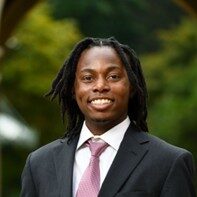
Chiad Onyeje
Class of 2019
- Johns Hopkins University, Ph.D. candidate, Biomedical Engineering, Vivien Thomas Scholars Fellow
- UMBC, B.S. Chemical and Biochemical Engineering, Meyerhoff Scholar
“The general versatility to which biomaterial delivery has progressed (in both implantable and injectable forms) is astounding in how it genuinely seems to have a material or modulation for every problem we come across. I’m also really happy to see an increasing trend in the wider biomedical science world collaborating closer with the clinical world, ensuring smoother transitions from bench to bedside.”
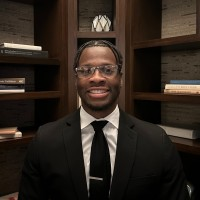
Omobolade Odedoyin
Class of 2019
- Johns Hopkins University, Ph.D. student in Computer Science, GEM Ph.D. Fellow
- Johns Hopkins University, M.S.E. Data Science, GEM Master’s Fellow & Rubenstein Fellow
- Johns Hopkins University, B.S. Applied Mathematics and Statistics, Cummings Scholar
“I’m especially excited about the intersection of machine learning and health care. From AI-driven mental health chatbots to predictive modeling for nuclear systems, machine learning is becoming a tool for both personal well-being and global safety.”
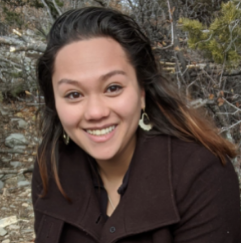
Sadie Blancaflor
Class of 2018
- Adjunct Professor at University of Alaska, Fairbanks
- Stanford University, MS Earth Systems Science
- Stanford University, BA, Political Anthropology
From Valdez, Alaska, Sadie studies human-environmental systems and cultural anthropology. Sadie’s people-centered approach to issues of environmental justice and climate displacement is informed by her diverse experiences, ranging from co-founding a nationally-recognized youth climate activism organization, interviewing climate activists in red states on how to bridge the partisan divide, farming on frozen Alaskan tundra nearly 400 miles from the nearest road system, and working as a stagiaire at a sustainability-oriented Michelin-starred restaurant. On a national level, Sadie serves as board co-chair for Power Shift Network and as the National Reinvestment Director for the College Climate Coalition.
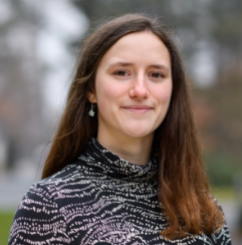
Claire Wayner
Class of 2018
- Senior Associate at Rocky Mountain Institute (RMI)
- Princeton University, B.S. Engineering, Civil and Environmental Engineering
As a Senior Associate at RMI, Claire works to advance proactive transmission buildout to keep costs low for ratepayers and create a reliable, clean grid for all.
Growing up near an urban park, Claire developed a deep love for the natural world, driving her to dedicate her studies and career to solving what she sees as the defining crisis of our time: climate change. A 2020 Udall Scholar, Claire was actively involved in making Princeton’s campus more sustainable, leading the Princeton Student Climate Initiative, serving on Undergraduate Student Government as the inaugural Sustainability Chair, and working for the Office of Sustainability as a peer representative. Through internships at the Federal Energy Regulatory Commission and National Renewable Energy Laboratory, Claire became fascinated by the electricity grid and saw her life’s mission as decarbonizing it through sound policies and regulations.

Saul Wilson
Class of 2010
Saul Wilson is an Assistant Professor of Political Science at Ashoka University in India, where he holds a joint appointment with the Centre for China Studies.
His research examines Chinese political economy, both as window into comparative political economy and as a consequential case in its own right. His primary research agenda looks at the construction, functioning, and malfunctioning of China’s state land monopoly. A second strand of research uses the rapid rotation of Chinese politicians across local leadership positions to gain insight into the importance of leadership.
In his book project, he argues that the central government was the driving force behind building China’s state land monopoly. You can read more about this project here.
His broader interest in Chinese municipal politics has also prompted a series of projects on the role of leadership. He has sought to evaluate the effect local leaders have on their jurisdictions through the study of municipal development policies, government land sales, budgeting, and–last but not least–personnel assignments. Working with Chen Hao, Cheng Cheng, Wang Yuhua, and Xu Changxin, he has created a dataset of all officials who have served in leadership positions in Shanxi 山西 province since the founding of the Communist Party in 1921. So far, they have a dataset of over 60,000 distinct officials, which they have made available here. You can find more details about the dataset in this paper.
Along with Julia Harten, Hou Li, and Andrew Stokols, he helps organize the MIT-UBC-Harvard Urban China Zoom Speaker Series. Before COVID, they used to meet in person in Boston. Now they meet on Zoom, with speakers from around the world. You can join their mailing list here.
Student Outcomes
In November 2014, the Baltimore Education Research Consortium (BERC) published a Preliminary Examination of Ingenuity Student Outcomes from the classes of 2008 and 2013. The study sought to determine whether Ingenuity middle school graduates who did not continue in Ingenuity at Poly nonetheless experienced continuing academic benefits from their prior Ingenuity experience. BERC compared Ingenuity students to a suitable comparison group.
BERC reached the following conclusions:
Ingenuity middle school graduates earned, on average, 3.5 credits in math, as compared to 2.5 among comparison students. For advanced science credits, Ingenuity students earned 3.9, as compared to 2.7 among their peers.
Ingenuity students earned significantly more Advanced Placement credits in high school (9.3 versus 5.8).
Ingenuity students achieved significantly higher weighted GPAs at the end of high school than comparable students, with an average GPA of 3.0, compared to 2.5 in the comparison group.
Ingenuity students attained significantly higher scores on the PSAT and SAT tests across all subject areas.
Ingenuity Student Pledge
The philosophy of the Ingenuity Project is to nurture, develop and encourage the Ingenuity participant. In keeping with this philosophy, students agree to the following pledge when joining the program.
INGENUITY STUDENT PLEDGE:
- I PLEDGE to participate in Ingenuity orientations, enrichment opportunities and experiences to support my development and growth as a STEM leader.
- I PLEDGE to practice these Core Values to help me make good decisions in school and grow as a student and future STEM leader.
- PASSION FOR EXCELLENCE – I will strive for excellence, not perfectionism. There are many ways to achieve excellence and it will require integrity, self-reflection, and resilience. This begins with completing my school assignments and preparing for assessments to the best of my ability.
- SOCIAL RESPONSIBILITY – I will seek to use Math, Science, Technology, and Engineering responsibly and ethically to benefit society, our environment, and the greater good.
- CURIOSITY – I will pose meaningful questions to complex problems. I will seek out and value multiple perspectives, participate in dialogue in my classes, and embrace new opportunities.
- INNOVATION – I will take risks and learn from my failures. I will explore new possibilities and look for ways to create positive change around me. This begins with practicing a growth mindset and taking advantage of all opportunities to learn, strengthen my skills, and grow as a student.
- COLLABORATION – I will collaborate across diverse groups by listening, exchanging ideas, sharing power, and helping others develop their skills. This includes asking others for help and advocating for what I need in school.
- INCLUSIVITY – I will create meaningful relationships with people from different cultures and backgrounds. I will affirm and honor others’ interests and perspectives, and I will make authentic efforts to get to know and appreciate all of my classmates regardless of our different life experiences.