
Mentoring with The Ingenuity Project
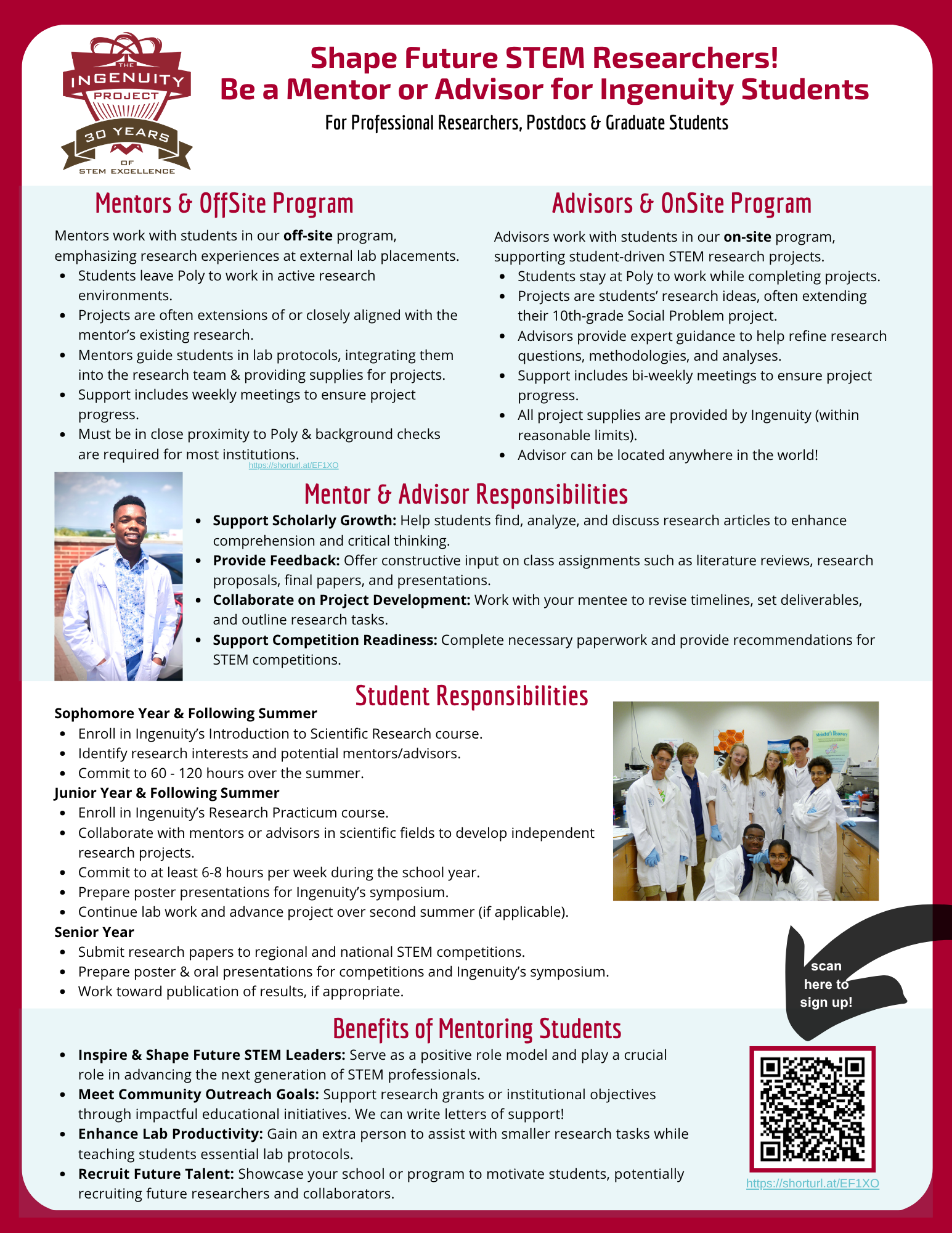
Ingenuity’s Research Practicum connect students with mentors including faculty, researchers, and STEM professionals at area colleges and laboratories, research institutions, and startup companies.
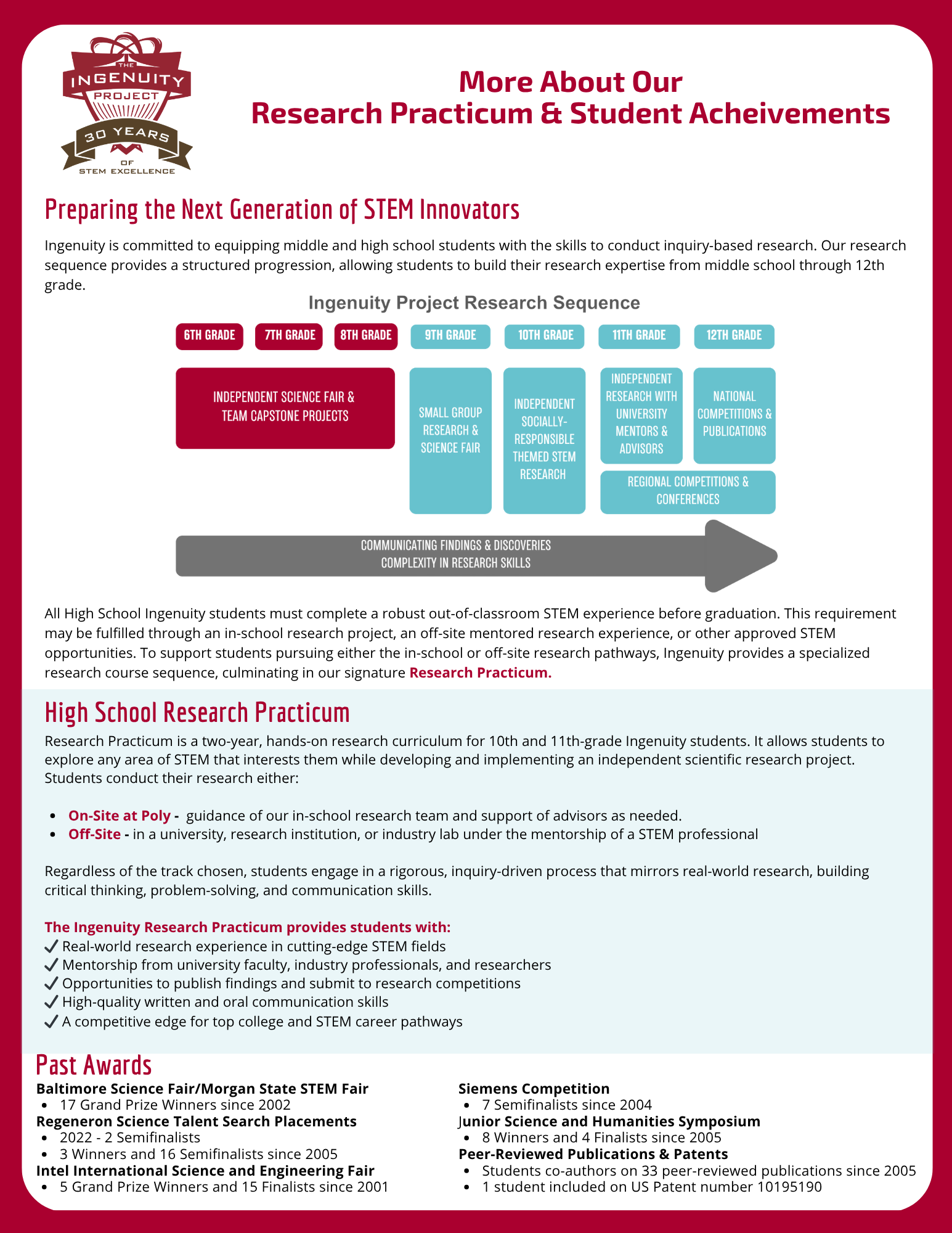
Ingenuity supports students interested in cutting-edge research and development in the fields of science, technology, mathematics, and engineering with two engaging experiences: off-site and on-site research paths. The two and three-year sequential program begins in 10th grade.
How Mentors Help
- Provide direct oversight at research locations.
- Read drafts of papers and presentations.
- Assign relevant readings
- Provide guidance to improve assignments.
- Help identify and prepare students for conferences and/or seminars in respective fields.
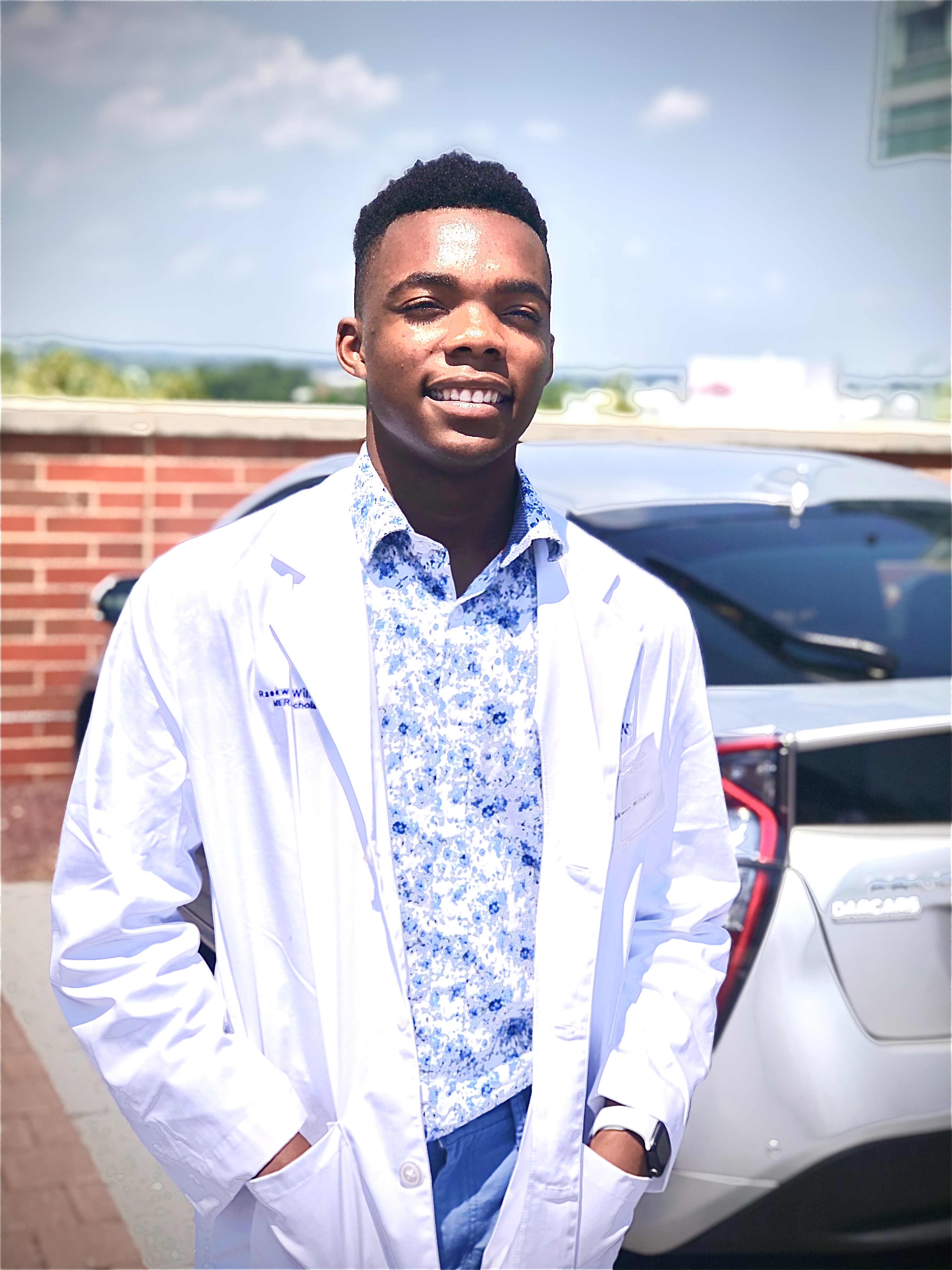
“My mentor, Dr. Jelani Zarif — he’s really supportive. When I first asked him to be my mentor, he didn’t have a lab, and since then, he’s become an assistant professor. It’s great to network with him at Hopkins, and all of the people I meet in the lab. This summer, I went to events with them — talks, birthday parties — it’s a really good group to bond with outside of the lab. And my mentor is always sharing textbooks and articles about Biochemistry with me.”
Raekwon, ’20
“I personally want to thank Dr. Brown for guiding and helping me continuously throughout my path in STEM. From the beginning of my time with the lab I was made to feel not just welcome but appreciated and valued. The members of the lab, and Dr. Brown especially, not only taught me so much but also treated me as a fellow researcher with insights and ideas. To this day Dr. Brown has continued to give me advice and assistance as I continue to find my way, and it is an understatement to call him an ideal mentor.”
Ihemriorochi, ’21
“Dr. Schott provided a welcoming and constructive environment which helped me develop my research and writing skills. His guidance set me up well for a future in STEM and has allowed me to easily immerse myself in biology at the university level!”
Cecelia, ’24
“Before I started my research under Dr. Smith, I was unsure of where I wanted to head long term other than having a general love for Earth’s history. Dr. Smith fostered that love and channeled it into leading me down the single most valuable and eye opening experience of my education. Her help and energy has permanently altered the course of my life in such a positive manner, she is one of the people I am the most privileged to have been able to cross paths with.”
Kaif, ’23
“Dr. Maya Gomes was an amazing mentor. She managed a welcoming and organized lab that allowed me to learn and create. I developed an appetite for knowledge through the research sources and instruction she provided. I had strong support while developing my own research project in her lab, building up from my knowledge foundation. In college I began new research in civil engineering, catching on fast using the skills and drive I matured in Dr. Gomes’ lab. Even now today as a civil engineer, I strive to learn the newest standards and practices, so I can create respected transportation solutions.”
Ari, ’20
Prospective Mentors
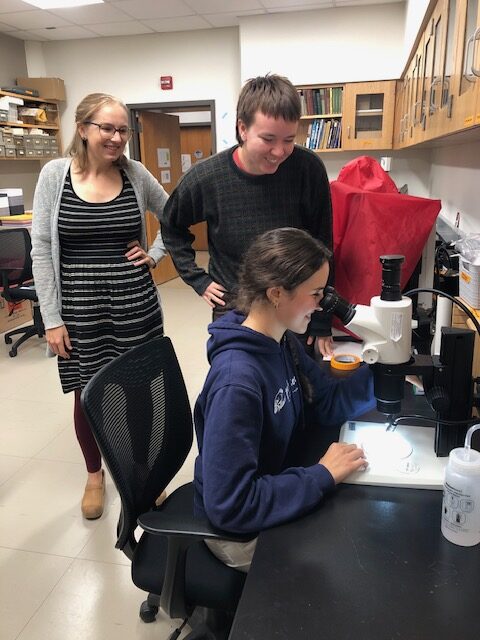
Watch how our curious sophomores explore research topics that spark their passion and lead them to pursue independent projects through Ingenuity’s Research Practicum.
Research Practicum Mentorship Opportunity
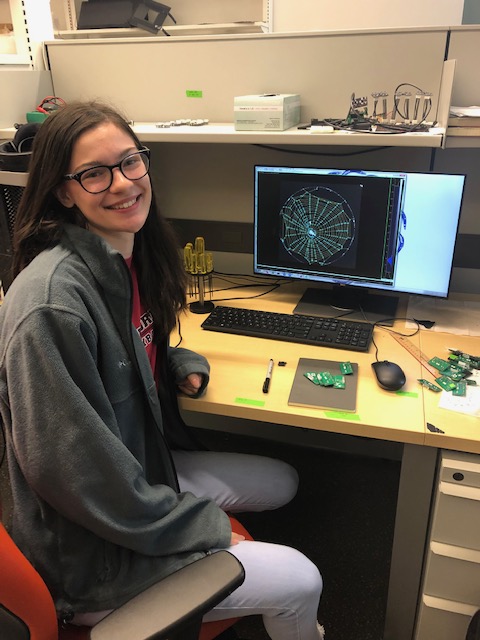
Research Practicum gives students hands-on experience in the fields of Biology, Chemistry, Engineering, Environmental, and/or Plant Sciences. Research Practicum partners include Johns Hopkins University, University of Maryland School of Medicine, and the Space Telescope Science Institute.
The Mentorship Experience
Mentor Frequently Asked Questions
What is the overarching goal of the research practicum?
Students complete an independent research project under the tutelage of an expert, apply the scientific method or engineering design process, improve science communication.
What are the requirements for the research and class portions of the practicum?
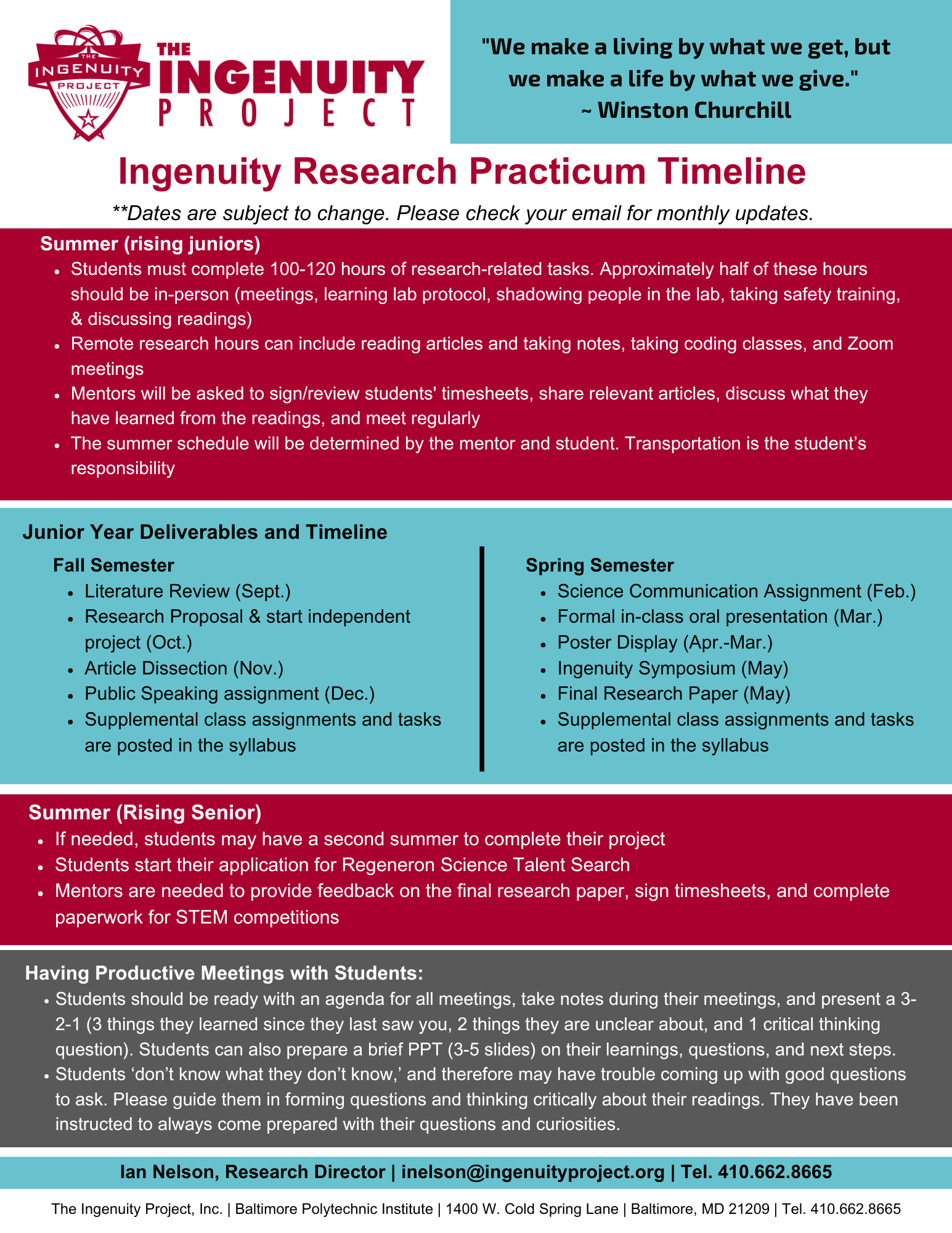
For research, students must complete 60-80hrs (on-site) or 100-120hrs (off-site) over the summer, after sophomore year. During the school year, students must complete 6-8 hours a week of research. Other requirements include maintaining a lab notebook, time sheet, following lab protocol (if applicable), maintain frequent communication with mentor, and conduct research related tasks Tuesday-Friday.
For the class position of the practicum, students are required to complete 4 hours a week of classwork. They complete assignments pertaining to the research process and their independent project. Students have biweekly meetings with the Research Director. Students have instruction every Monday.
What are my responsibilities as a mentor?
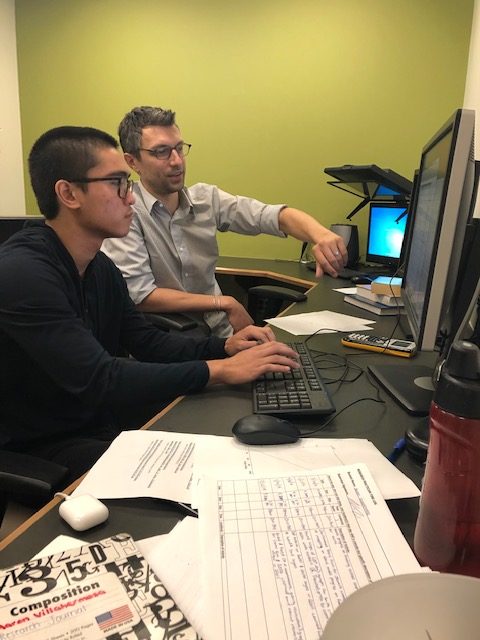
Mentors support students in developing an independent research question and guide their progress throughout the project. They should meet with their mentee regularly, provide feedback on papers and presentations, and support reading comprehension and science communication. When applicable, mentors are encouraged to include students in lab meetings or journal clubs. A graduate student or postdoc may be assigned as a day-to-day supervisor if needed. Mentors are also responsible for signing timesheets, completing STEM competition paperwork, writing recommendations, and passing a background check.
Do mentors receive any training?
Yes, mentors and supervisors are invited to attend a Mentor Training session in the fall semester. During this training, requirements and expectations of mentors are shared, along with tips on working with Ingenuity students.
My mentee is still very shy and doesn’t always participate or ask questions. How can I get them more engaged?
Foster a growth mindset by reminding students, “You don’t know this method yet,” and emphasizing progress over perfection. Lead by example by sharing your own research challenges and setbacks, and model professional behavior. Encourage your mentee to ask questions, express concerns, and take ownership of the conversation—give them space to talk. Always offer the benefit of the doubt and create a supportive environment for learning. To make meetings productive, have your mentee practice their elevator pitch, present a brief summary of a recent article, or use the 3-2-1 format: three things they’ve learned, two things they’re unsure about, and one critical thinking question. Don’t hesitate to say, “Please write this down so you don’t forget,” to reinforce good habits.
What is the timeline of the practicum?
Sophomores begin their mentor search in the spring semester. Interviews for potential mentors and student matches take place February through May – all mentors must be secured by mid-May. Students begin their practicum after the last day of school (mid-June) and continue through the summer completing research related tasks (i.e. background reading, starting an annotated bibliography, regular meetings with their mentor,